

Attorney fees for trust administration can vary widely based on several key factors, making it crucial for trustees and trustors in California to understand potential costs upfront. Generally, these fees fall into three primary categories:
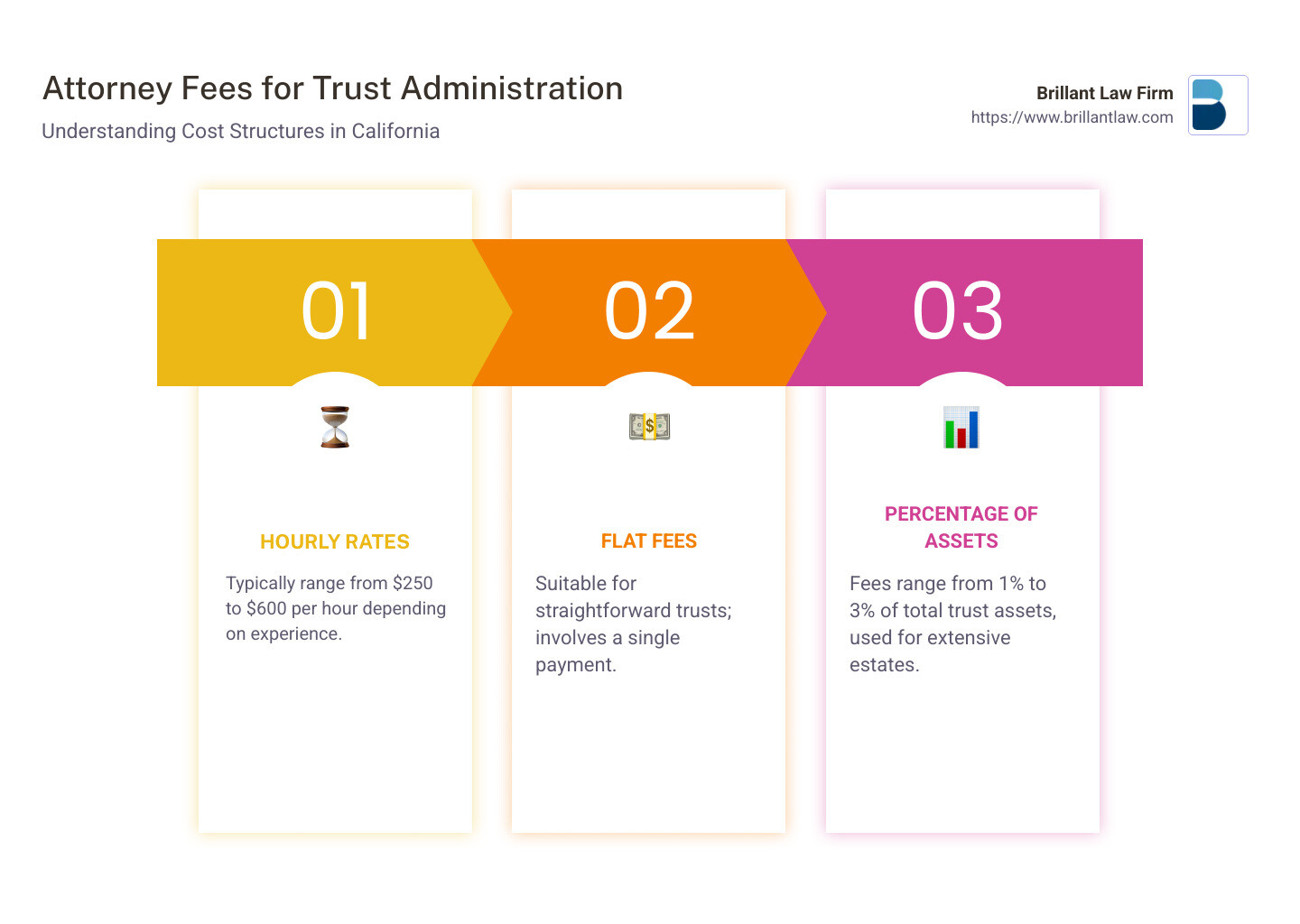
- Hourly Fees: Typically between $250 to $600 per hour in California, depending on the attorney’s experience and the complexity of the trust.
- Flat Fees: Some straightforward trusts may involve a single flat fee for administration.
- Percentage of Trust Assets: For more extensive estates, fees might be calculated as a percentage, often ranging from 1% to 3% of total asset value.
Understanding these fees is essential for making informed financial decisions during the trust administration process.
As David Brillant, a seasoned estate planning and trust attorney in California, I specialize in explaining the complexities surrounding attorney fees for trust administration. With a background as a certified specialist in estate, trust, and probate law along with a master’s in taxation, I’m here to guide you through the intricacies of trust administration fees.
Easy attorney fees for trust administration word list:
– fiduciary accounting and trust administration guide
– trust administration accounting
– trust administration fees schedule
Understanding Trust Administration Fees
Trust administration fees are essential to consider when managing a trust. These fees cover the costs associated with maintaining and overseeing the trust’s assets. They typically fall into three main categories: management fees, trustee fees, and attorney fees for trust administration.
Management Fees
Management fees are charged for the ongoing oversight of the trust’s investments. This includes monitoring market conditions, rebalancing the portfolio, and ensuring that the investment strategy aligns with the trust’s objectives. These fees can vary widely, often depending on the complexity of the investment portfolio and the amount of assets under management.
Trustee Fees
Trustee fees compensate the individual or organization responsible for administering the trust. The trustee’s duties include managing investments, filing taxes, and distributing assets according to the trust document. The trustee’s role is critical, as they ensure that the trust operates smoothly and in accordance with the settlor’s intentions.
Trustee fees can be structured in various ways:
- Flat Fees: These are often used for simpler trusts and involve a single, predetermined fee.
- Hourly Rates: For more complex trusts, trustees might charge hourly rates, which can range from $150 to $400 per hour in California.
- Percentage of Assets: Some trustees charge a percentage of the trust’s assets, typically ranging from 0.5% to 2%.

Attorney Fees for Trust Administration
Attorney fees are another significant component of trust administration costs. These fees cover legal advice and services required to ensure the trust complies with California law. Attorneys can help with drafting legal documents, resolving disputes, and providing guidance on complex matters.
The structure of attorney fees can vary:
- Hourly Rates: As previously mentioned, these can range from $250 to $600 per hour in California.
- Flat Fees: Used for straightforward legal tasks, such as drafting a simple trust document.
- Percentage of Assets: For larger estates, some attorneys may charge a percentage of the total asset value.
Understanding the different types of trust administration fees is crucial for trustees and beneficiaries. It helps in planning and ensuring that the trust is managed efficiently and cost-effectively. With Brillant Law Firm’s expertise in California, we ensure that our clients are well-informed about these fees from the start, avoiding any surprises later on.
Attorney Fees for Trust Administration
When it comes to attorney fees for trust administration, several factors can influence the cost. Understanding these factors is essential for anyone involved in managing a trust.
Factors Influencing Attorney Fees
Trust Size: Larger trusts often require more work, which can increase legal fees. A trust with more assets demands detailed oversight and more complex management.
Complexity: Trusts with diverse assets like real estate, businesses, or unique investments need specialized legal expertise. This complexity can drive up the cost, as attorneys must steer intricate legal and financial issues.
Trustee Type: The type of trustee can also impact fees. A corporate trustee, for example, may have different fee structures compared to an individual trustee. Corporate trustees might charge more due to their extensive resources and expertise.
How Attorney Fees Are Charged
Attorneys may charge for their services in several ways:
Hourly Rates: This is a common method, especially for complex trusts. In California, hourly rates can range from $250 to $600 per hour. This approach ensures that you only pay for the time spent on your case.
Flat Fees: For straightforward tasks, like drafting a simple trust document, attorneys might charge a flat fee. This can be a cost-effective option for less complicated legal needs.
Percentage of Assets: Some attorneys base their fees on a percentage of the trust’s total assets. This method is often used for larger estates, where the value of the assets justifies a percentage-based fee.
Understanding these fee structures helps in planning and budgeting for trust administration. With the right legal guidance, you can ensure that the trust is managed effectively, aligning with the grantor’s intentions while keeping costs under control.
At Brillant Law Firm, we specialize in navigating these complexities for our clients in California, ensuring transparency and fairness in all aspects of trust administration.
Types of Trusts and Their Associated Costs
When considering trust administration, it’s crucial to understand the different types of trusts and their associated costs. Each type has unique characteristics and cost implications. Let’s break down the main types of trusts you’ll encounter:
Revocable Trusts
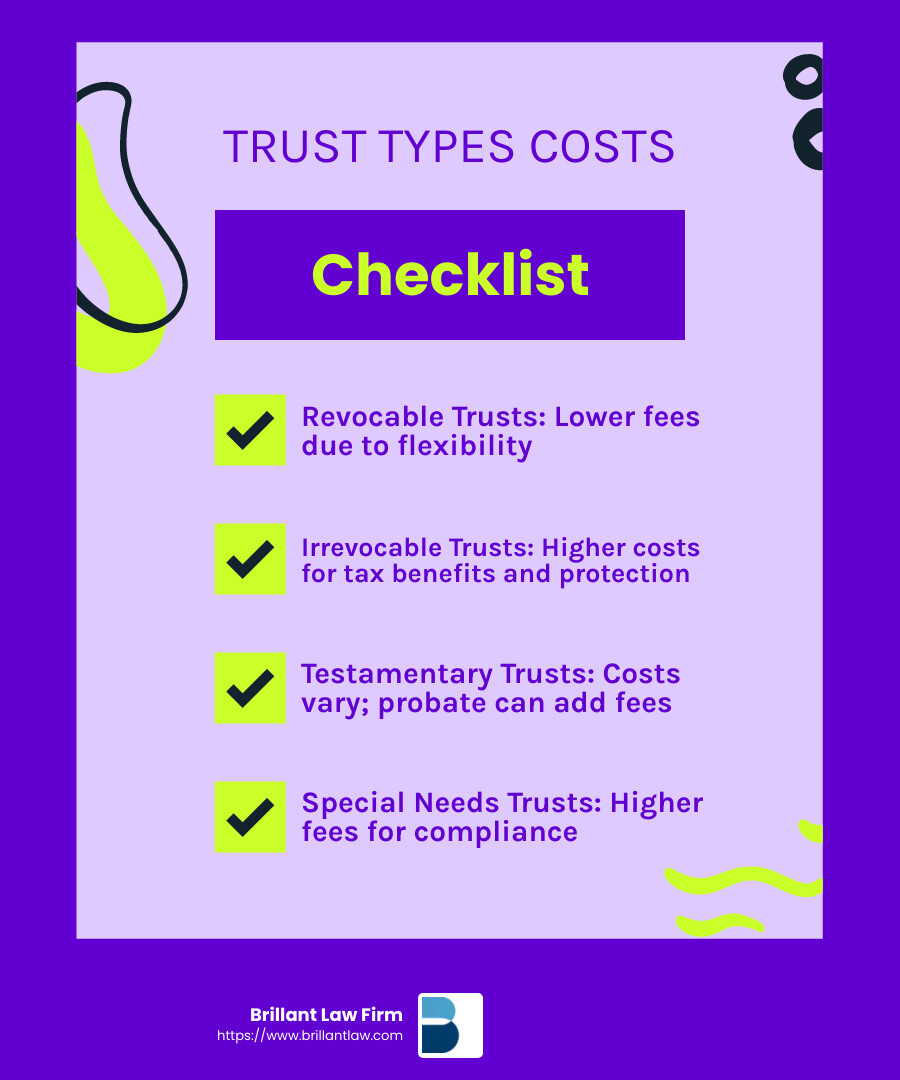
A revocable trust allows the grantor to maintain control over the trust assets during their lifetime. They can modify or dissolve the trust as needed. This flexibility often leads to lower administration fees since less oversight is required. However, because the trust is still part of the grantor’s estate, it doesn’t provide the same tax benefits as irrevocable trusts.
Irrevocable Trusts
Unlike revocable trusts, an irrevocable trust cannot be changed once established. This rigidity means more stringent administration and higher costs. These trusts are often used for tax benefits and asset protection. Given their complexity, expect higher fees due to the need for specialized legal and financial expertise.
Testamentary Trusts
A testamentary trust is created through a will and only takes effect after the grantor’s death. The associated costs can vary significantly based on the trust’s size and complexity. Because these trusts are subject to probate, they might incur additional legal fees compared to living trusts.
Special Needs Trusts
Special needs trusts are designed to provide for a disabled beneficiary without affecting their eligibility for government benefits. These trusts require careful administration to comply with legal requirements, often resulting in higher fees. Some opt for Pooled Special Needs Trusts, which can help reduce individual costs by pooling resources with other beneficiaries.
When setting up a trust, consider both the benefits and the associated costs. At Brillant Law Firm, we guide our California clients through these options, ensuring they choose the right type of trust for their needs and budget.
Who Pays the Trust Administration Fees?
When it comes to trust administration fees, understanding who foots the bill is essential. Let’s break it down:
Trust Assets
In most cases, the trust’s assets cover the administration fees. Think of it like this: if a grandparent leaves a nest egg in a trust, the costs to manage that trust usually come out of the trust itself. This means the fees are typically taken care of before any funds are distributed to the beneficiaries.
Trustee Responsibility
Sometimes, the trustee might have to pay certain fees out of pocket. This usually happens if they haven’t done their job properly or have acted against the interests of the beneficiaries. For instance, if a trustee neglects their duties or uses the trust for personal gain, they might be liable for the resulting costs.
Trust Document Provisions
The trust document itself can also dictate who pays the fees. It’s a bit like a rulebook, detailing how the trust should be managed and who is responsible for what. That’s why it’s crucial to have a well-drafted trust document. At Brillant Law Firm, we ensure that our clients’ documents are clear, so there are no surprises about fee responsibilities.
Understanding these aspects helps ensure a smooth trust administration process. It’s all about clarity and making sure everyone knows their role and responsibilities. This way, the trust can serve its purpose effectively, without unnecessary disputes or confusion.
Frequently Asked Questions about Trust Administration Fees
What are typical attorney fees for trust administration?
When it comes to attorney fees for trust administration, several factors can influence the cost. In California, where Brillant Law Firm is located, fees can be higher than in other areas. Generally, you might expect to see hourly rates ranging from $300 to $600, depending on the attorney’s experience and the complexity of the trust. Some attorneys may charge a percentage of the trust’s assets, often between 1% and 2%, while others might offer flat fees for specific tasks.
How are trust administration fees calculated?
The calculation of trust administration fees can vary based on several factors:
- Size of the Trust: Larger trusts often require more work, leading to higher fees.
- Complexity: Trusts with complicated asset structures or multiple beneficiaries may incur higher costs due to the additional work involved.
- Trustee Type: Professional trustees, such as banks or trust companies, might have different fee structures compared to family members or friends serving as trustees.
These fees typically cover services like investment management, tax filings, and asset distribution. It’s crucial to understand these components to anticipate the overall cost accurately.
Who is responsible for paying trust administration fees?
The responsibility for paying trust administration fees usually falls on the trust itself. The fees are typically deducted from the trust’s assets before any distributions to beneficiaries. However, if a trustee fails in their duties or acts inappropriately, they might be required to cover certain fees out of their own pocket. Additionally, the trust document may specify who pays for what, making it essential to have a well-drafted document to avoid misunderstandings.
Conclusion
Navigating trust administration can be complex, but with the right expertise, it doesn’t have to be overwhelming. At Brillant Law Firm, we specialize in providing custom solutions for trust administration in California. Our team brings unparalleled expertise and dedication to every case, ensuring our clients receive the best possible guidance.
Why Choose Brillant Law Firm?
Expertise in Trust Administration: We have a deep understanding of the intricacies involved in managing trusts. Whether it’s dealing with complex asset structures or ensuring compliance with California laws, our experienced attorneys are here to help.
Bespoke Strategies: Every trust is unique. We develop ironclad strategies custom specifically to your needs, ensuring that your trust administration is handled efficiently and effectively.
Commitment to Excellence: Our unwavering dedication to excellence means that you can trust us to manage your affairs with the utmost professionalism and care.
If you’re dealing with trust administration in California and want to ensure that you’re getting the best possible service, reach out to us at Brillant Law Firm. Let us help you protect your legacy and provide peace of mind for you and your beneficiaries.


