

Asset inventory for estate planning: 7 Powerful Ways to Avoid Costly Mistakes 2025
The Essential Foundation of Estate Planning
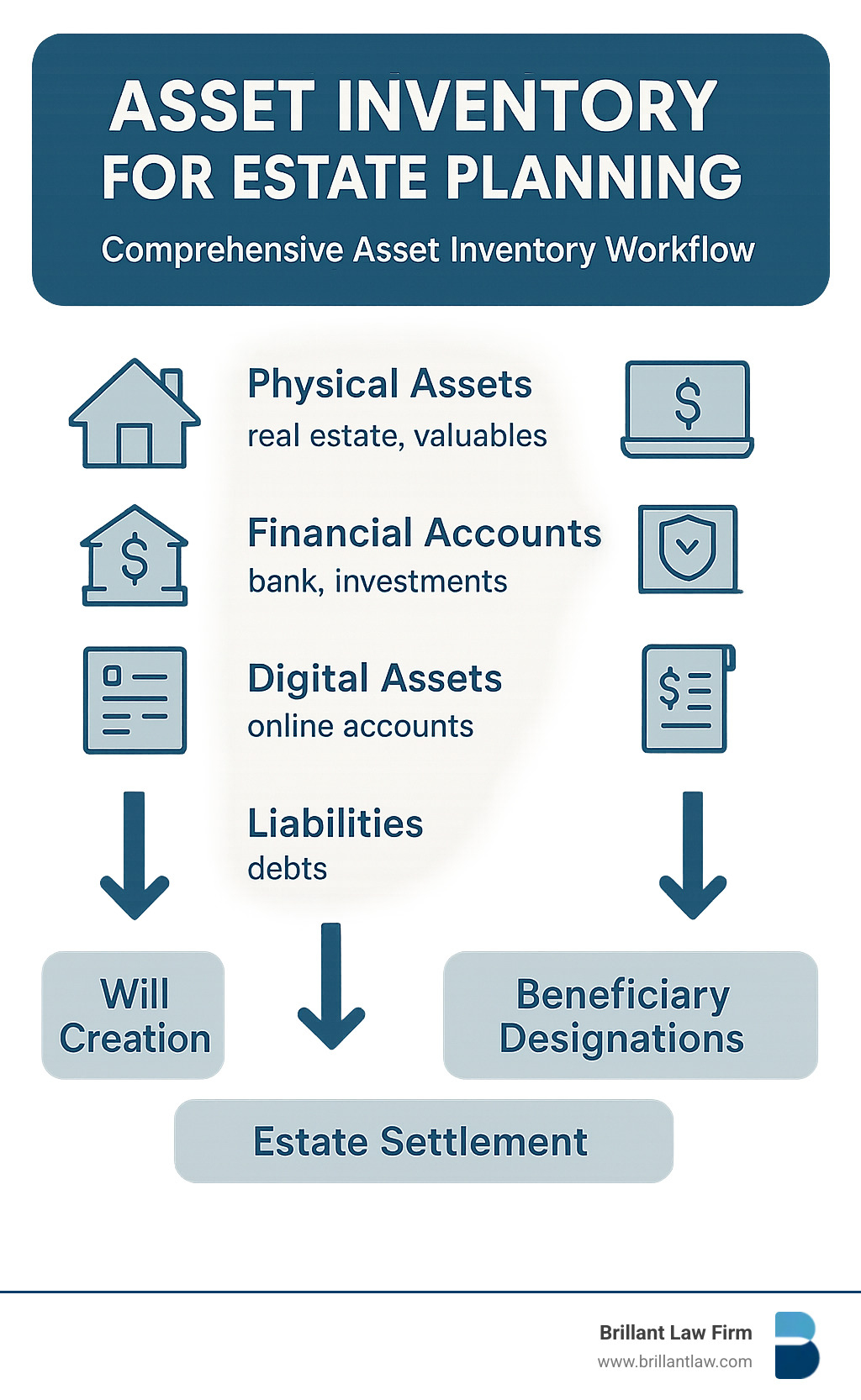
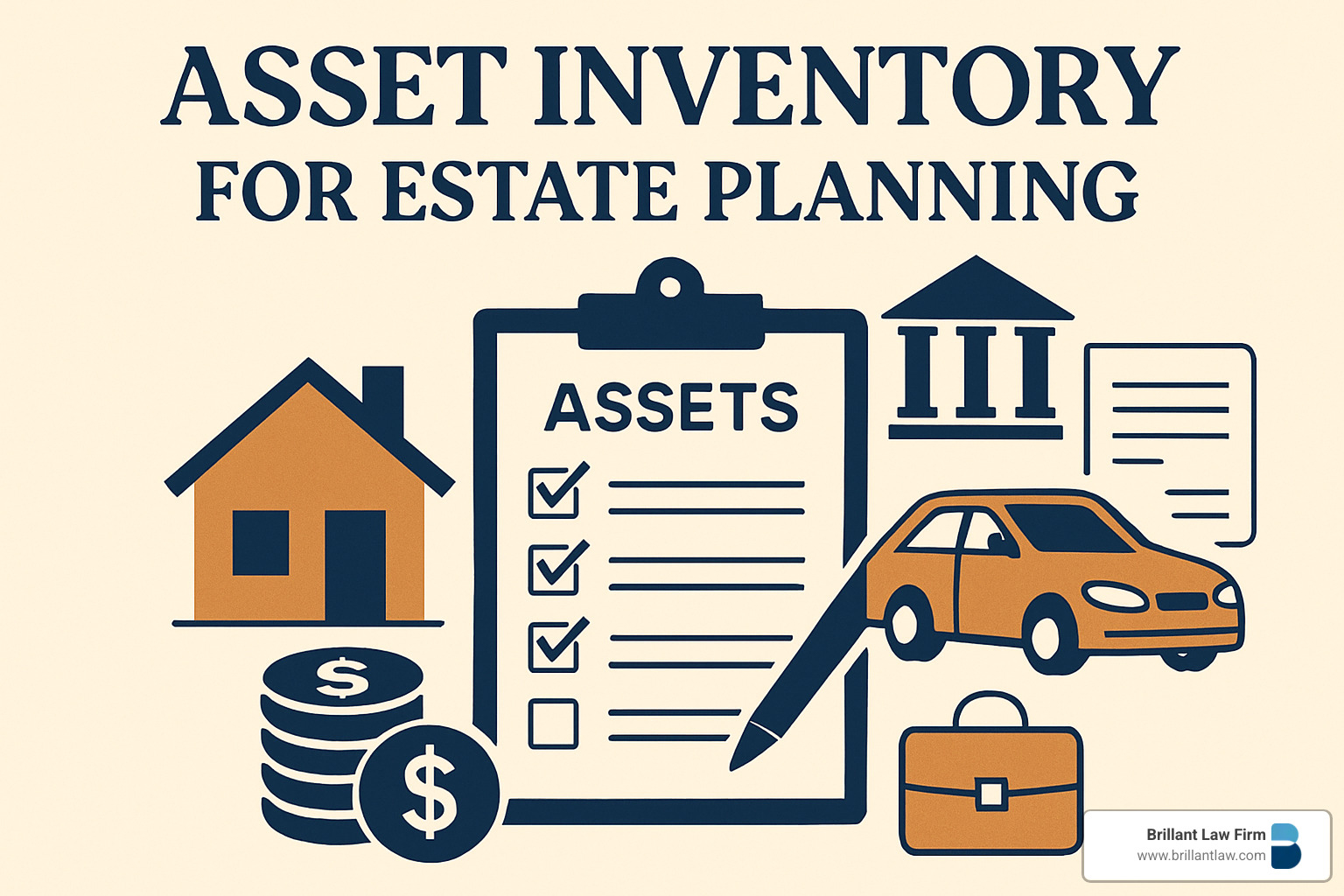
Asset inventory for estate planning is a comprehensive listing of everything you own, including financial accounts, real property, personal belongings, and digital assets, along with their estimated values, ownership details, and beneficiary designations. This document serves as the foundation for your entire estate plan.
To create an effective asset inventory for estate planning:
- List all tangible assets (real estate, vehicles, jewelry, art)
- Document all financial accounts (bank, investment, retirement)
- Include digital assets (cryptocurrency, online accounts, intellectual property)
- Record all liabilities (mortgages, loans, credit card debt)
- Note ownership structure (individual, joint, community property)
- Specify location information (where items or documents are stored)
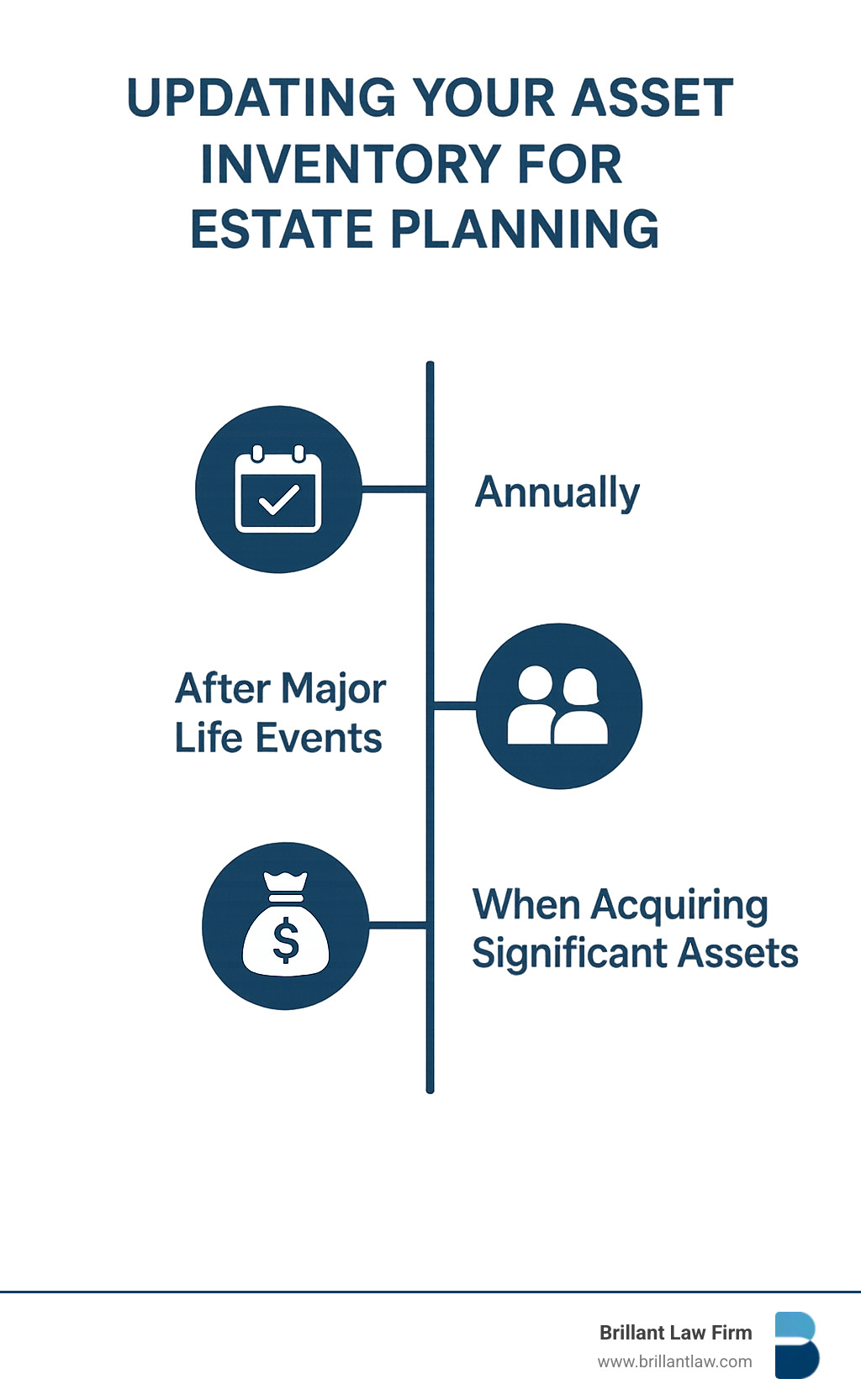
- Update regularly (annually or after major life events)
Creating an asset inventory might seem daunting, but it’s one of the most valuable gifts you can leave your loved ones. Nearly 60% of Americans don’t know where all their assets are located, and executors spend an average of 16 months settling estates—much of that time simply locating and valuing assets. A detailed inventory dramatically simplifies this process.
Think of your asset inventory as a roadmap for your executor and heirs. Without it, they may face unnecessary delays, expenses, and stress during an already difficult time. Up to 10% of life insurance benefits go unclaimed because beneficiaries are unaware policies exist, and digital assets worth over $50 billion remain unclaimed in the U.S.
I’m David Brillant, a Certified Specialist in Estate Planning, Trust and Probate Law by the State Bar of California Board of Legal Specialization, and I’ve guided countless clients through creating comprehensive asset inventories for estate planning that protect their legacies and provide clarity to their loved ones.
Asset inventory for estate planning terms to know:
– California estate planning services
– Durable power of attorney California
– Trust administration services
Why an Asset Inventory Is the Cornerstone of Your Estate Plan
Creating an asset inventory for estate planning isn’t just helpful—it’s truly the foundation that supports your entire estate plan. Think of it as the blueprint that guides everyone involved after you’re gone. Without clearly documenting what you own, where it’s located, and how it’s titled, even the most carefully crafted estate plan might fall short of your intentions.
In California, navigating probate can be particularly challenging and expensive. Most people don’t realize that probate fees are calculated based on the gross value of your estate—not what’s left after debts are paid. For perspective, if your estate is valued at $1 million, the combined attorney and executor fees could exceed $46,000. A detailed asset inventory for estate planning helps your executor steer this process efficiently, potentially saving your heirs thousands in unnecessary expenses.
Beyond the financial benefits, consider the emotional relief your inventory provides. The weeks and months following a loss are overwhelming enough without the added stress of hunting for accounts, policies, and valuables. Your loved ones won’t be left wondering if they’ve overlooked something important or failed to honor your wishes. Instead, they’ll have a clear roadmap during an emotionally challenging time.
It’s surprising that only about one-third of Americans have created a will or living trust, leaving the majority without formal estate plans or asset inventories. This creates significant challenges for families who must piece together financial puzzles while grieving. By creating a thorough inventory now, you’re providing an invaluable gift to those you leave behind.
The Probate Time-Saver
The average estate takes approximately 16 months to settle completely, with much of that time spent simply locating and valuing assets. In California, with its complex probate system, this timeline often stretches even longer if the estate includes multiple properties or if family disagreements arise.

A well-prepared asset inventory for estate planning dramatically speeds up this process by giving your executor everything they need upfront. They’ll have a comprehensive list of assets to report to the probate court, documentation of fair market values (or methods for determining them), and clarity about which assets pass through probate versus those that transfer through other means like beneficiary designations or trust arrangements.
Your inventory will also identify all outstanding debts that must be settled and provide crucial details like account numbers, contact information, and locations of important documents. This level of organization becomes particularly valuable when facing California’s strict probate requirements.
California probate courts require executors to file an Inventory and Appraisal form (DE-160) within four months of appointment. Having your asset inventory prepared in advance gives your executor a significant head start on this critical filing, potentially shaving months off the settlement process and reducing stress during an already difficult time.
With nearly 60% of Americans unsure where all their assets are located and approximately 10% of life insurance benefits going unclaimed because beneficiaries didn’t know policies existed, the value of a comprehensive inventory cannot be overstated. It’s not just paperwork—it’s peace of mind for everyone involved.
Asset Inventory for Estate Planning: Step-by-Step Framework
Creating a comprehensive asset inventory for estate planning doesn’t have to feel overwhelming. Think of it as building your financial story—one piece at a time. Let’s break this down into manageable steps that make sense for your life in California.
Gather Core Documents First
Before diving into listing every asset you own, start by collecting the foundation documents that tell your financial story:
Your existing estate planning documents like wills and trusts serve as your starting point. Gather property deeds, vehicle titles, and life insurance policies that show what you own and who’s protected. Recent financial statements, retirement account information, and business ownership papers reveal your current financial picture. Don’t forget the past three years of tax returns—they’re a goldmine of information about your assets and income sources.
Marriage certificates, divorce decrees, or prenuptial agreements matter too, as they affect how property is classified in California. If you served in the military, locate those discharge papers as well.
These documents aren’t just papers—they’re the building blocks of your inventory. Store them somewhere safe, either in a fireproof home safe or secure deposit box, and make sure your executor knows how to find them when needed.
For a comprehensive guide on organizing these crucial documents, visit our Estate Planning Checklist.
What to Include in Your Asset Inventory for Estate Planning
Your asset inventory for estate planning should paint a complete picture of everything you own and owe. Let’s walk through each category:
Start with your real estate holdings—your home, vacation properties, rental investments, timeshares, and even undeveloped land. For each property, note its address, approximate current value, mortgage details, how the title is held, and where to find the deed.
Next, catalog your financial accounts—checking, savings, CDs, investment accounts, stocks, bonds, and annuities. Include each institution’s name, account number, approximate value, and any beneficiary designations you’ve made.
Don’t overlook your retirement accounts. Your 401(k), IRAs, pension plans, and other retirement vehicles often represent a significant portion of your wealth. Note who manages each plan, the account numbers, current values, and especially the beneficiaries you’ve designated.
Personal property matters too. Your vehicles, jewelry, artwork, collectibles, and even household furnishings should be documented, particularly items of significant value or sentimental importance.
Business interests require special attention in your inventory. Whether you own a company outright, hold partnership interests, or have created intellectual property, document ownership percentages, estimated values, and any agreements affecting what happens to these assets after you’re gone.
Digital assets have become increasingly important. Your cryptocurrency, online payment accounts, frequent flyer miles, social media profiles, email accounts, and digital collections should all be included with access instructions.
Don’t forget other assets like safe deposit boxes, pending legal claims, expected inheritances, and specialized accounts like HSAs or 529 College Savings Plans.
For a printer-friendly version of this comprehensive list, see our Asset Checklist for Estate Planning.
Document Debts and Liabilities Clearly
Your asset inventory for estate planning isn’t complete without accounting for what you owe. Before your heirs receive anything, your debts must be settled.
Be thorough in documenting your mortgages, auto loans, student loans, credit card balances, and medical bills. Include any tax liabilities, business loans, or legal judgments against you. For each debt, record who you owe, the account number, current balance, monthly payment, interest rate, and when it’s due to be paid off.
This detailed debt picture helps your executor prioritize payments and understand your estate’s true net value. In California, creditors have specific rights that must be addressed during estate settlement.
The IRS may also have claims against your estate for unpaid taxes. For more information about tax implications for your estate, visit the IRS website.
Assign Ownership, Value & Beneficiaries
For each asset in your inventory, you’ll need to clarify three critical details:
First, document how each asset is owned. This matters tremendously in California, where community property laws significantly impact estate planning. Assets acquired during marriage are generally considered community property, while those you owned before marriage or received as gifts or inheritances typically remain separate property.
Second, record current values. For bank accounts, use recent statements. For real estate or valuable collections, consider professional appraisals. With life insurance, note both the current cash value (if any) and the death benefit amount.
Third, list all beneficiary designations. These designations trump what’s written in your will, so they must align with your overall estate plan. Keep them updated, especially after major life events like marriages, divorces, or births.
California offers several ways to title property, each with different implications for your estate:
– Sole ownership passes through probate
– Joint tenancy with right of survivorship transfers directly to the surviving owner
– Community property reflects California’s marital property laws
– Community property with right of survivorship combines these concepts
– Tenancy in common allows for unequal ownership shares
– Trust ownership can avoid probate entirely
For investment accounts, note whether they’re protected by the Securities Investor Protection Corporation. You can learn more about these important protections at Member SIPC.
Understanding these ownership distinctions isn’t just legal minutia—it fundamentally determines how your assets transfer and whether they’ll go through probate. This knowledge forms the backbone of an effective California estate plan.
Organizing, Securing & Updating Your Inventory
Once you’ve compiled your asset inventory for estate planning, the way you organize and protect this information becomes just as important as the inventory itself. Think about it – you’ve just created a comprehensive document containing your entire financial life. This valuable roadmap deserves thoughtful storage and security.
Most of our California clients find that a structured format works best, whether you’re digitally inclined or prefer old-fashioned paper. Many people feel comfortable using programs like Microsoft Excel or Google Sheets, which make sorting and updating information straightforward when circumstances change.
For those storing digital copies, security shouldn’t be an afterthought. Consider using a password manager to keep your login credentials safe from prying eyes. Rather than leaving your inventory vulnerable in standard cloud storage, an encrypted external drive offers better protection. If you do prefer cloud convenience, choose services with robust encryption features. Some clients even invest in specialized estate planning software that builds security right into the experience.
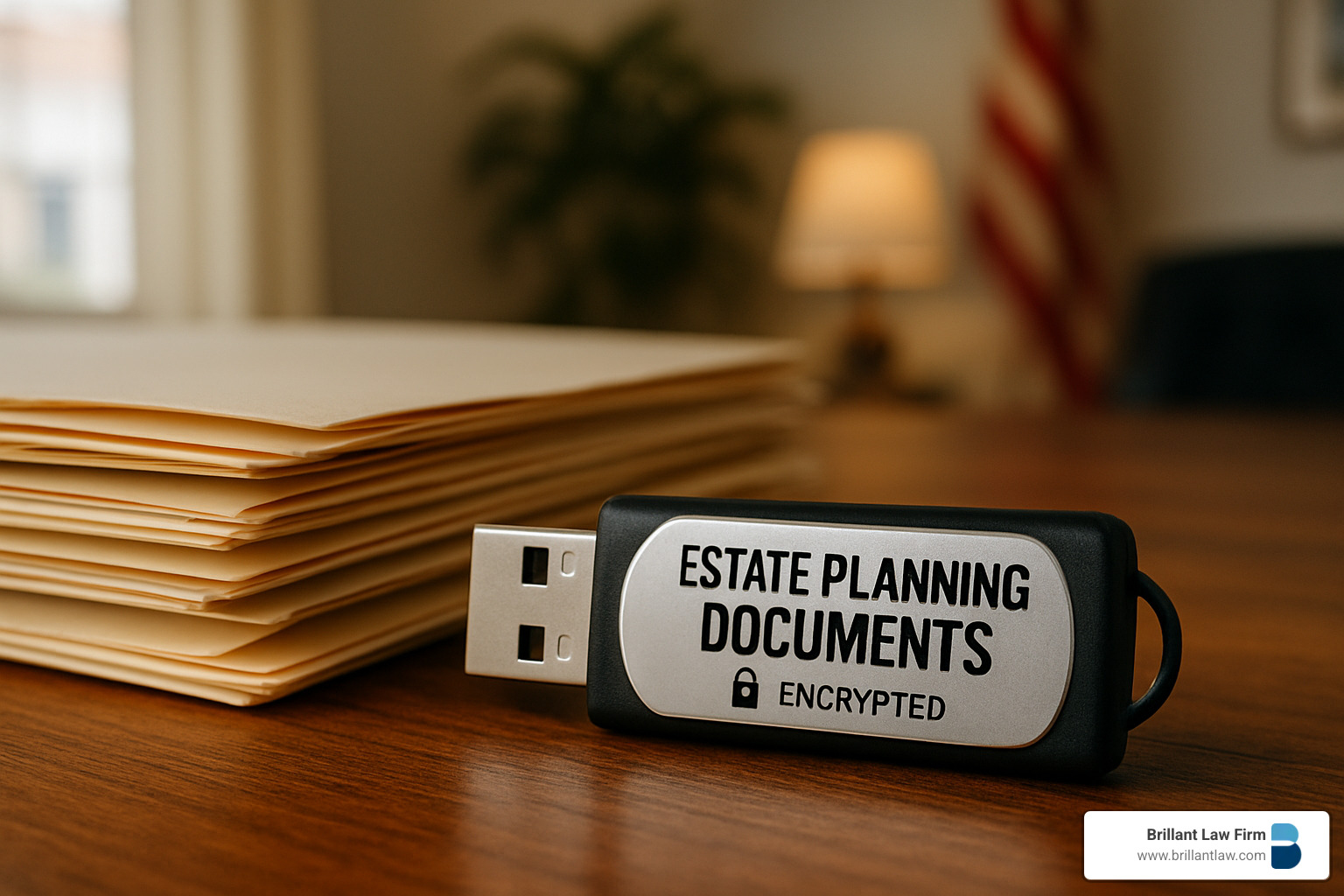
If you’re more comfortable with physical copies (and many people are), invest in a fireproof, waterproof home safe for your primary copy. A duplicate stored in a safe deposit box provides excellent backup protection. Some clients also feel peace of mind by entrusting a sealed copy with their estate planning attorney.
The most crucial step? Make absolutely certain your executor or successor trustee knows where to find your inventory and how to access it when needed. I’ve seen many well-organized estates still cause headaches because nobody knew where to find the information. Consider providing your executor with a sealed envelope containing access instructions, to be opened only upon your incapacity or death.
Updating Your Asset Inventory for Estate Planning
An outdated inventory can sometimes be worse than having no inventory at all – it creates false confidence while potentially leading your loved ones astray. Your asset inventory for estate planning should be a living document that evolves as your life changes.
I recommend my California clients review their inventories at least once annually, but also after any significant life event. Marriage or divorce dramatically changes your asset structure. The birth of a child might prompt new insurance policies or savings accounts. The death of a spouse or beneficiary requires immediate attention to your designations.
Financial milestones also warrant updates – purchasing that dream home in San Francisco, selling your vacation property in Lake Tahoe, opening new retirement accounts, or closing old ones. Business ownership changes, retirement, or even significant market fluctuations affecting your investment values all deserve documentation.
Make this process easier by creating a recurring “inventory review day” each year. Some clients choose their birthday, anniversary, or January 1st as their annual reminder. The specific date matters less than establishing the habit.
To simplify your updating process, download our Free Estate Planning Worksheet, which includes a user-friendly asset inventory template you can easily modify as your California assets and circumstances evolve.
Common Mistakes Californians Make & How to Avoid Them
Creating an asset inventory for estate planning seems straightforward, but even the most careful Californians often make mistakes that can derail their estate plans. After helping hundreds of clients through this process, I’ve noticed several recurring issues that are worth highlighting.
Digital assets frequently slip through the cracks during inventory creation. Your cryptocurrency, online accounts, and digital media collections can represent substantial value—both financial and sentimental. Yet many people completely forget to document them. Make a point to list all digital holdings, along with access instructions, and consider naming someone tech-savvy as your digital executor who can steer this increasingly complex landscape.
I’ve seen truly heartbreaking situations where outdated beneficiary designations sent assets to ex-spouses or deceased relatives, despite clear contrary intentions in a will. Beneficiary forms on retirement accounts, insurance policies, and payable-on-death accounts override whatever your will says. These designations need regular review, especially after marriages, divorces, births, or deaths in the family.
For California business owners, properly valuing your company presents unique challenges. Many entrepreneurs either significantly over or undervalue their businesses, creating tax complications or family disputes later. Professional business valuations may seem expensive now, but they’re an investment that provides clarity and prevents costly conflicts among your heirs.
The “empty trust” problem is remarkably common across California. Clients diligently establish revocable living trusts to avoid our state’s lengthy probate process, but then never actually transfer assets into the trust’s name. An unfunded trust is like a beautiful safe with nothing inside—it offers no protection. Your inventory should clearly flag which assets have been properly retitled to your trust and which still need attention.
Digital security concerns deserve special attention. I’ve encountered situations where clients stored their unencrypted inventory in cloud storage or on unsecured devices, essentially creating a roadmap for identity theft. Always use strong encryption and password protection for digital copies of your inventory. At the same time, don’t make things so secure that your executor can’t access this vital information when needed.
The single-copy problem puts many estate plans at risk. Whether it’s a house fire, computer crash, or simple misplacement, relying on just one version of your inventory is asking for trouble. Keep at least one backup copy in a completely different location—if your primary copy is digital, maintain a printed backup in a secure location, and vice versa.
Personal property often gets minimal attention in estate inventories, yet these items frequently cause the most family conflict. That painting in your dining room might be worth far more than you realize, both financially and emotionally. For valuable collections, professional appraisals provide clarity, while detailed instructions about who receives items of sentimental importance can prevent painful family disputes after you’re gone.
By avoiding these common pitfalls, your asset inventory for estate planning will truly serve its purpose: providing clear guidance during a difficult time and ensuring your California legacy unfolds exactly as you intend.
Frequently Asked Questions About Asset Inventories
How often should I review my inventory?
Life moves quickly, and your asset inventory for estate planning needs to keep pace. I recommend setting a recurring calendar reminder for an annual review—perhaps on your birthday or at the start of each year. This simple habit ensures your inventory remains a reliable roadmap for your loved ones.
Beyond your yearly check-in, certain life events should trigger an immediate review. Just got married or divorced? Had a new baby or grandchild? Received an inheritance or sold your business? Each of these milestones reshapes your financial landscape and warrants updating your inventory.
I’ve seen how quickly California property values can fluctuate, making regular reviews especially important for homeowners in our state. When market conditions significantly change the value of your major assets, it’s time to revisit your inventory—even if it hasn’t been a full year since your last update.
Who should have access to the list?
Your asset inventory for estate planning contains your financial life story—treat access accordingly. Think of it as a need-to-know document rather than an open book.
In most cases, I recommend limiting complete access to just a few key people:
Your trusted estate planning attorney can provide valuable guidance on keeping your inventory legally sound. Your designated executor or successor trustee will need this information to fulfill their duties when the time comes. And depending on your relationship, your spouse or partner may be appropriate to include in this inner circle.
Rather than distributing copies now, consider creating an “in case of emergency” letter that explains where to find your inventory and how to access it. For example: “My complete inventory is stored in the fireproof safe in my home office. The combination is on file with my attorney at Brillant Law Firm.”
Some clients feel tempted to share inventory details with all beneficiaries, but I’ve seen this create unnecessary family tension. A better approach might be selective sharing—letting your daughter know about the family heirlooms you’ve designated for her, without revealing your entire financial picture to everyone.
What software can help me maintain it?
Finding the right tool to maintain your asset inventory for estate planning is a bit like choosing the perfect California wine—it comes down to personal preference and specific needs.
Many of my clients start with familiar spreadsheet programs like Microsoft Excel or Google Sheets. These offer flexibility and sorting capabilities but require some manual setup. The advantage? You control exactly how your information is organized and stored.
Password managers have evolved beyond just storing login credentials. Services like LastPass, 1Password, and Bitwarden now offer secure document storage and can be an excellent place to maintain asset information alongside access details. The built-in security features make these particularly attractive options.
If you’re looking for something that automatically tracks financial accounts, apps like Mint or Personal Capital can be helpful companions to your inventory process. They’ll keep tabs on your accounts and investments, though you’ll still need to separately document physical assets and personal property.
For the most comprehensive solution, dedicated estate planning platforms like Everplans, Trustworthy, or Cake offer specialized features designed specifically for creating and maintaining asset inventories. These typically include document storage, sharing capabilities with designated individuals, and estate-specific organization.
Whichever digital tool you choose, technology can fail. Always maintain a secure physical copy of your most important documents and inventory in a fireproof safe or similar secure location. Your executor will thank you for this backup when the time comes.
For personalized guidance on creating and maintaining your California estate plan, including a comprehensive asset inventory, our team at Brillant Law Firm is ready to help with solutions custom to your unique situation. Your peace of mind is our priority.
Conclusion & Next Steps
Creating a comprehensive asset inventory for estate planning isn’t just paperwork—it’s one of the most thoughtful gifts you can leave your loved ones. This roadmap provides clarity during an emotional time, saves thousands in unnecessary costs, and ensures your wishes are honored exactly as you intended.
At Brillant Law Firm, we’ve walked alongside countless California families through this process. We’ve seen how a well-organized inventory brings peace of mind to both our clients and eventually their loved ones. Our approach balances technical expertise with genuine compassion, because we understand estate planning touches both your financial future and your family’s emotional wellbeing.
Ready to create your asset inventory? Here’s your starting path:
Begin by gathering your essential documents—those statements, deeds, and policies hiding in filing cabinets and desk drawers. Then list everything you own and owe with as much detail as possible. Be sure to note how each asset is titled and who’s named as beneficiary, as these details often override even the most carefully crafted will.
Once complete, secure your inventory using both physical safeguards and digital protection. Remember to share access information with your executor—they can’t follow a roadmap they can’t find! Finally, commit to regular reviews, especially after major life events like marriages, births, or property purchases.
Your asset inventory forms just one piece of your complete estate plan. California’s estate laws can be particularly complex, with unique community property considerations and probate procedures that differ significantly from other states. Working with an experienced Estate Planning Attorney ensures your plan steers these complexities successfully.
At Brillant Law Firm, we don’t believe in one-size-fits-all solutions. Whether you need a straightforward will, a sophisticated trust structure, a business succession plan, or tax minimization strategies, our team crafts personalized plans that reflect your unique family situation and values. We’re not just preparing documents—we’re protecting your legacy and the people you love.
Don’t leave your family’s future to chance or force them to solve puzzles during their time of grief. Contact Brillant Law Firm today to schedule a consultation and take that crucial first step toward comprehensive estate planning that truly reflects your wishes.


