

Asset checklist for estate planning is more than a simple task—it’s a foundation for peace of mind. Whether organizing real estate holdings, identifying all other assets, or setting up legal directives, every detail matters. At the heart of estate planning lies the assurance that your wishes will be respected and your loved ones safeguarded.
Estate planning isn’t just about tax savings and asset distribution; it’s about creating certainty and reducing stress for those you care about. A well-thought-out plan can ease the burden on your family and provide clarity amid life’s uncertainties. Notably, the late Aretha Franklin lacked a legal will, a choice that complicated her survivors’ efforts in settling her affairs. This demonstrates the crucial nature of having a plan, regardless of the size of your estate.
I’m David Brillant, a seasoned expert in asset checklist for estate planning. As a certified specialist in Estate Planning, Trust, and Probate Law in California, I draw upon my extensive experience to untangle complex legal webs and offer you a blueprint for peace of mind. Let’s explore how to ensure your legacy is both protected and respected.
Understanding Estate Planning
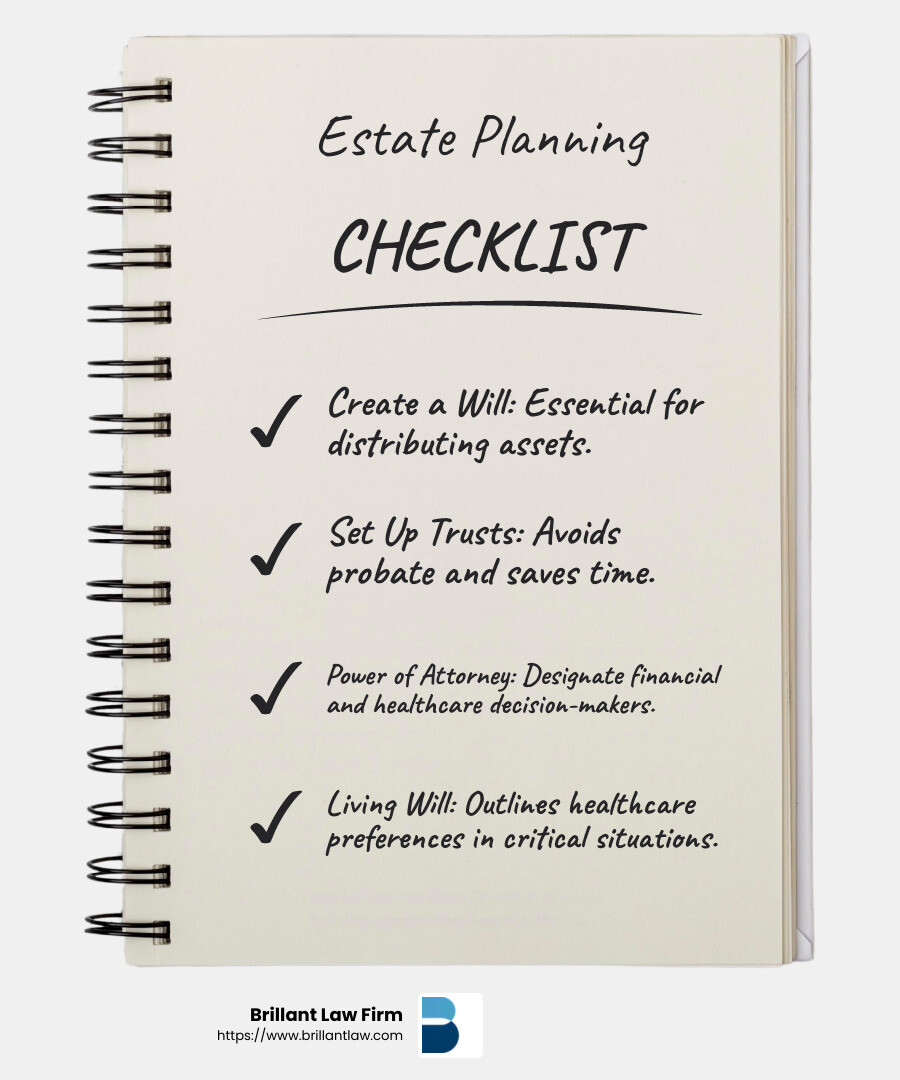
Estate planning is more than just a will—it’s a comprehensive strategy to manage your legacy. Let’s explore the key components: wills, trusts, powers of attorney, and living wills.
Wills
A will, or “last will and testament,” is your legal voice after you’re gone. It outlines how you want your assets distributed and who will care for your minor children. In California, dying without a will means the state decides who gets what, which can lead to family disputes. Think of a will as your roadmap for your loved ones, ensuring your wishes are honored.
Trusts
Trusts are like a treasure chest for your assets. They hold property on behalf of your beneficiaries and can bypass the probate process, saving time and money. Trusts are especially useful if you have minor children or complex assets. In California, trusts can also help manage estate taxes. They’re an excellent tool for ensuring your assets are used exactly as you intend.
Powers of Attorney
A power of attorney (POA) designates someone to make decisions on your behalf if you can’t. There are two main types: financial and healthcare. A financial POA manages your money matters, while a healthcare POA makes medical decisions. It’s like appointing a trusted ally to step in when life takes an unexpected turn.
Living Wills
A living will, or advance directive, outlines your healthcare preferences if you’re unable to communicate. It works hand-in-hand with a healthcare POA. Consider it your voice in critical medical situations, ensuring your wishes are respected.
Creating a comprehensive estate plan requires careful consideration of these elements. Each plays a crucial role in safeguarding your legacy and providing peace of mind for you and your loved ones. As you move forward, estate planning is an ongoing process—keep your documents updated to reflect your current wishes and circumstances.
Asset Checklist for Estate Planning
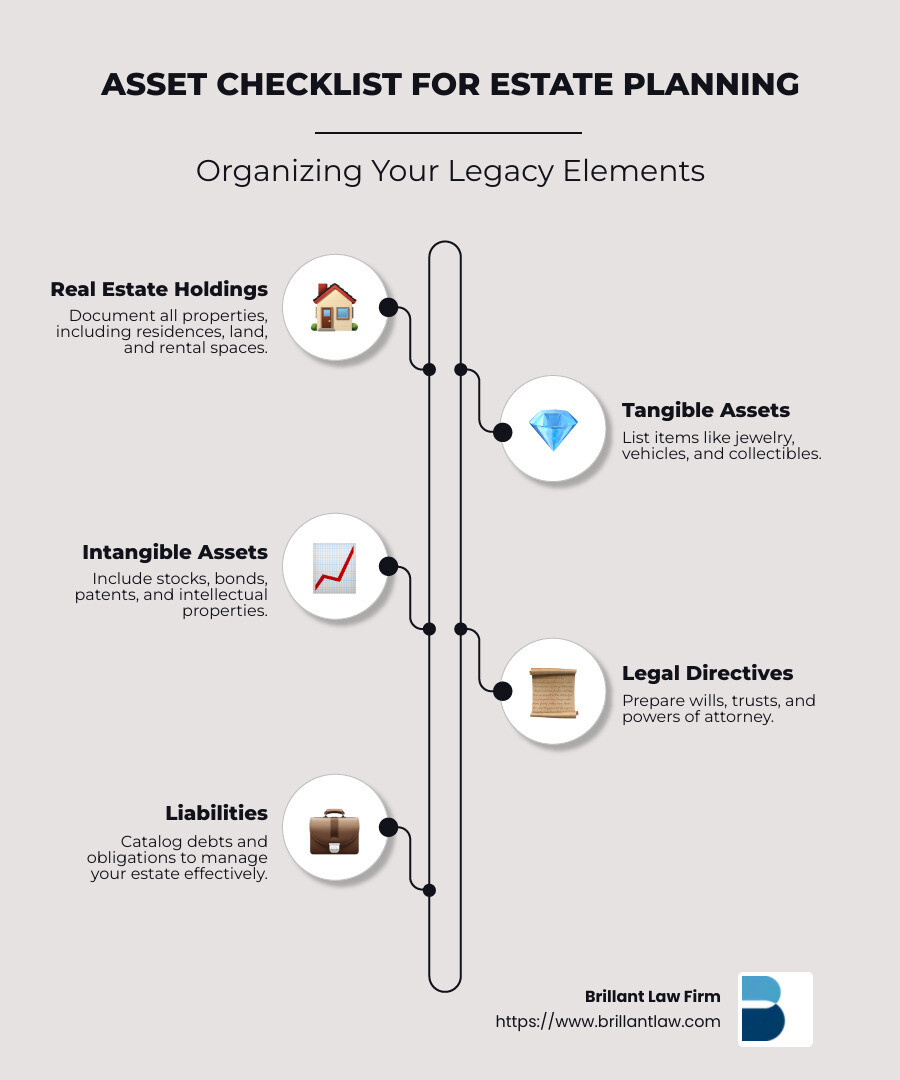
Creating a solid estate plan starts with a thorough inventory of your assets. This ensures that your wishes are clearly communicated and that your loved ones can easily manage your estate when the time comes. Let’s break down the key components of an asset checklist for estate planning: inventory, tangible assets, intangible assets, and liabilities.
Inventory
Begin by taking stock of everything you own. This might sound daunting, but it’s a crucial first step. Think of it as creating a snapshot of your financial world.
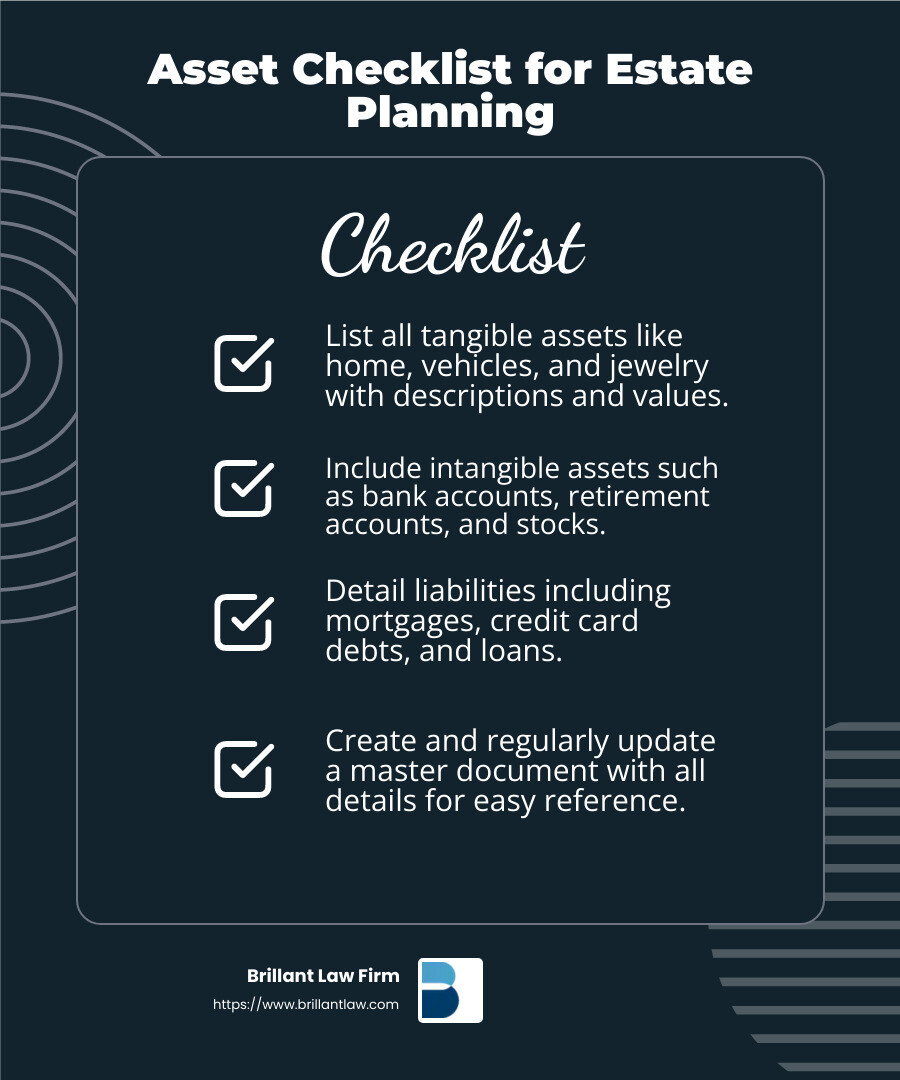
- Tangible Assets: These are physical items you own. Include your home, vehicles, jewelry, artwork, and any other valuables. Make a detailed list with descriptions and estimated values. You might be surprised at how much these add up!
- Intangible Assets: These are non-physical items like bank accounts, retirement accounts (such as 401(k)s or IRAs), life insurance policies, stocks, and bonds. Gather recent statements to get a clear picture of their current value.
Liabilities
Don’t forget to list your liabilities, too. These are debts or obligations that need to be settled, even after you pass away. Common liabilities include:
- Mortgages
- Credit card debt
- Personal loans
- Lines of credit
Listing your liabilities helps your heirs understand what needs to be paid off and ensures that your estate is managed effectively.
Organizing Your Assets
Once you’ve listed your assets and liabilities, organize them in a way that’s easy for your estate administrator to understand.
- Create a Master Document: Include all your assets and liabilities. Make sure to note account numbers, contact information, and the location of important documents.
- Keep It Updated: Life changes, and so do your assets. Review and update your inventory regularly, especially after major life events like marriage, divorce, or the purchase of a new home.
By taking the time to create a comprehensive asset checklist, you’re setting the stage for a smooth estate planning process. This not only protects your legacy but also provides peace of mind for your loved ones.
Now that you have a clear picture of your assets and liabilities, it’s time to move on to the next step: creating your estate plan. This involves designating beneficiaries, setting up directives, and ensuring you have all the necessary legal documents in place. Let’s explore the details.
Creating Your Estate Plan
Now that you’ve got your assets and liabilities sorted, it’s time to craft your estate plan. This is where you decide who gets what, who will carry out your wishes, and how to make it all legally binding.
Beneficiaries
Who Gets What?
Beneficiaries are the people or organizations you choose to inherit your assets. Think of them as the recipients of your life’s work. Make sure to clearly name them in your will, trusts, and any other relevant documents.
Backup Beneficiaries
Life is unpredictable. It’s smart to name backup beneficiaries in case your first choices are unable to inherit. This ensures your assets go where you want, no matter what.
Keep It Current
Regularly review your beneficiary designations. If you’ve had a major life event—like a marriage, divorce, or the birth of a child—update your beneficiaries to reflect your current wishes.
Directives
Setting the Rules
Directives are instructions about how your affairs should be handled if you’re unable to make decisions. They include living wills and powers of attorney.
Living Will
A living will outlines your healthcare wishes if you can’t communicate them yourself. This might include decisions about life support or other medical treatments.
Power of Attorney
A power of attorney designates someone to make decisions on your behalf. This could be for financial matters, healthcare, or both. Choose someone you trust deeply.
Legal Documents
Get It in Writing
Legal documents are the backbone of your estate plan. They ensure your wishes are followed and help avoid family disputes.
- Will: This is your main document, detailing who gets what and naming an executor to carry out your wishes.
- Trusts: These can help manage your assets during your life and after your death, potentially avoiding probate.
- Powers of Attorney and Living Wills: As discussed, these documents handle your healthcare and financial decisions if you’re incapacitated.
Estate Planning Attorney
Why You Need One
An estate planning attorney helps ensure your documents are legally sound and reflect your wishes. They can guide you through complex legal requirements and help you make informed decisions.
Finding the Right Fit
Look for an attorney experienced in California estate law. They should understand the nuances of local regulations and be able to tailor your plan to meet your specific needs.
By focusing on these key areas, you’re crafting a comprehensive estate plan that reflects your wishes and protects your loved ones. Up next, we’ll discuss how to implement and update your plan effectively.
Implementing and Updating Your Plan
You’ve crafted your estate plan, but now comes the crucial part—putting it into action and keeping it up to date. Let’s explore the essentials: trust funding, beneficiary designations, and document updates.
Trust Funding
Activate Your Trust
A trust is like a treasure chest. It’s only valuable if you actually put your treasures in it. This means transferring assets like property, bank accounts, or investments into the trust’s name. This process is known as “funding the trust.”
Why Fund It?
If you don’t fund your trust, it won’t work as planned. Your assets might end up in probate court, which is exactly what a trust is meant to avoid. So, make sure everything you want protected is included in the trust.
How to Fund
- Real Estate: Change the title of your property to the trust’s name.
- Bank Accounts: Transfer accounts or open new ones in the trust’s name.
- Investments: Update account registrations to reflect trust ownership.
Beneficiary Designations
Keep It Clear
Beneficiary designations on accounts like life insurance, retirement plans, and annuities override your will. So, it’s vital these are up to date and match your overall estate plan.
Regular Reviews
Life changes, and so should your beneficiary designations. Review them annually or after any major life event—like marriage, divorce, or a new child—to ensure they still align with your wishes.
Designate Wisely
- Primary and Contingent Beneficiaries: Name both primary and backup beneficiaries to cover all bases.
- Consistency: Ensure designations are consistent across all documents to avoid confusion or disputes.
Document Updates
Stay Current
Estate planning isn’t a one-and-done task. Laws change, and so do your circumstances. Regularly updating your documents ensures they reflect your current wishes and comply with California laws.
When to Update
- Life Events: Marriage, divorce, birth of a child, or the death of a beneficiary.
- Law Changes: Changes in estate tax laws or other regulations.
- Asset Changes: Buying or selling significant assets.
How to Update
- Review Annually: Set a reminder to evaluate your plan each year.
- Consult Your Attorney: Work with your estate planning attorney to make updates. They can ensure changes are legally sound and properly executed.
By diligently implementing and updating your estate plan, you ensure your wishes are honored and your loved ones are protected. Now, let’s tackle some frequently asked questions about estate planning.
Frequently Asked Questions about Estate Planning
What is the 5 by 5 rule in estate planning?
The 5 by 5 rule is a guideline used in trusts. It allows a beneficiary to withdraw the greater of $5,000 or 5% of the trust’s assets each year. This flexibility can provide beneficiaries with access to funds while still keeping the bulk of the trust intact for future needs. It’s a useful tool for those who want to balance immediate support with long-term financial stability.
How do you pass assets to heirs before death?
There are several ways to pass assets to your heirs before death, and each has its own benefits and considerations:
Gifting: You can give gifts up to $17,000 per person per year (as of 2023) without incurring gift taxes. This is a straightforward way to reduce the size of your estate and provide for your heirs.
Trusts: Setting up a trust allows you to control how and when your assets are distributed. You can specify conditions for distribution and even provide for beneficiaries over time.
Beneficiary Designations: For accounts like life insurance or retirement plans, you can name beneficiaries who will receive the assets directly upon your death, bypassing probate.
How do you organize assets for a will?
Organizing assets for a will involves a few key steps:
Create an Asset List: Start by listing all your tangible and intangible assets. This includes real estate, vehicles, bank accounts, investments, and personal belongings.
Valuation: Determine the market value of each asset. This helps in fairly distributing your estate and understanding its total worth.
Liabilities: Include any debts or liabilities, like mortgages or loans, to provide a clear picture of your net estate.
Beneficiary Designations: Ensure that your will aligns with any beneficiary designations on accounts, as these will take precedence.
By organizing your assets effectively, you ensure your will accurately reflects your wishes and simplifies the process for your heirs.
Next, we’ll explore how to create a comprehensive estate plan with the help of legal experts.
Conclusion
Estate planning is more than just a checklist; it’s about securing peace of mind for you and your loved ones. At Brillant Law Firm, we understand the complexities involved in crafting an estate plan that truly reflects your wishes. Our team specializes in bespoke strategies custom to your unique needs, ensuring that every aspect of your estate is handled with precision and care.
Our expertise in trusts, estates, taxation, and civil litigation sets us apart. We don’t just draft documents; we provide a comprehensive approach to estate planning that considers every detail. Whether it’s managing complex assets, minimizing tax liabilities, or setting up trusts, we’ve got you covered.
In California, where estate laws can be particularly intricate, having a dedicated team like ours is invaluable. We stay updated on the latest legal trends and regulations to ensure your plan is not only effective but also compliant with state laws.
For those ready to take the next step in estate planning, we invite you to explore our services. Find how our custom strategies can provide you with the security and clarity you deserve.


