

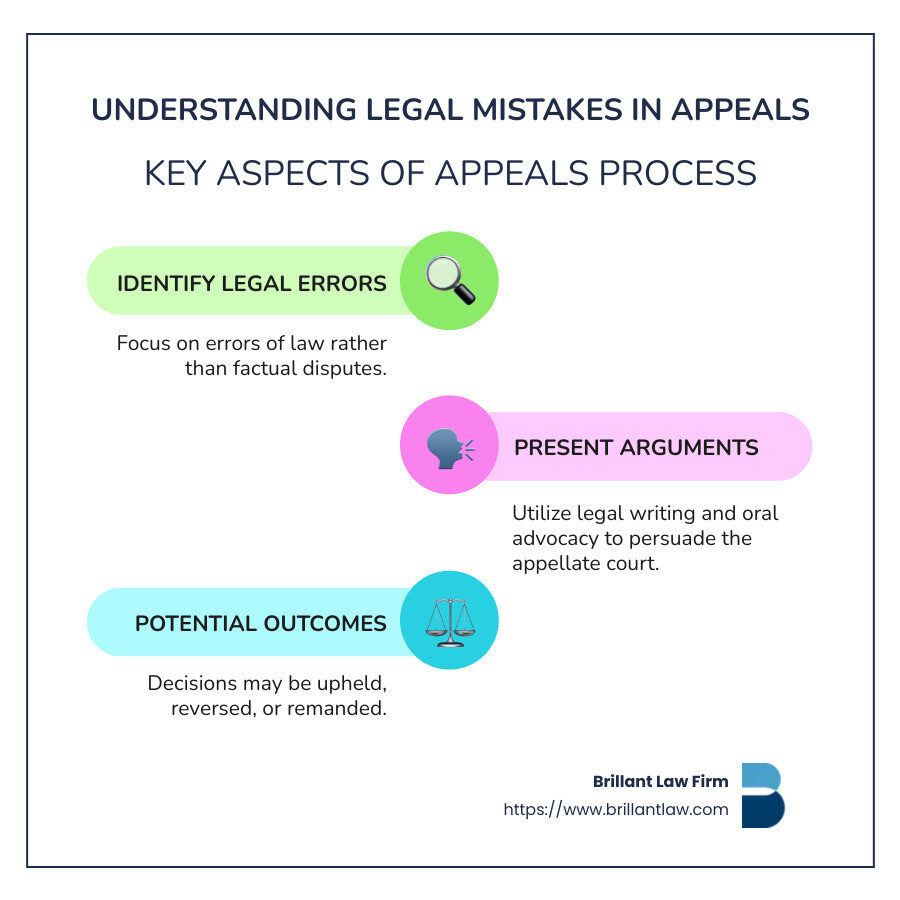
Appeals court attorney plays a crucial role when a legal decision from a lower court needs to be reviewed. When you believe a legal mistake affected the outcome of your case, an appeals court attorney can help by challenging those errors in a higher court. Here’s a quick breakdown of what to expect:
- Purpose: Correct legal errors that occurred in trial courts.
- Process: Focus on legal issues, not factual disputes.
- Outcome: Could lead to upholding, reversing, or remanding a decision.
Engaging with the appellate system allows you a second chance at justice when you feel missteps in the legal process have impacted the fairness of your trial. Appellate courts specialize in addressing these matters by ensuring that the law has been applied correctly and consistently.
I’m David Brillant, a seasoned expert in legal matters with a special focus on appellate practices, reflecting my dedication to solving complex issues for high-net-worth individuals and businesses. Transitioning now, let’s dig deeper into understanding the appeals process.
Know your Appeals court attorney terms:
– Appeals attorney near me
– criminal appellate lawyer
– family law appellate attorney near me
Understanding the Appeals Process
When a court decision doesn’t seem right, the appeals process offers a way to challenge it. Unlike trial courts, which focus on facts, appellate courts are all about the law. They ensure that the rules were followed correctly in the original trial.
Types of Appeals
Not all appeals are the same. Here are the four main types:
Direct Appeal: This is the most common. It’s a straightforward challenge to a final decision by a trial court. Think of it as saying, “I believe the court made a mistake in my case.”
Discretionary Appeal: This type isn’t a given right. The higher court decides whether to hear the case. It’s like applying for a job and hoping for an interview.
Interlocutory Appeal: This happens before the final decision in a trial. If a significant legal question arises mid-trial, an interlocutory appeal can address it.
Collateral Appeal: These are separate from the main case. They often deal with issues like the legality of detention, not the trial’s verdict itself.
Role of an Appeals Court
Appellate courts have a few key roles:
Review Legal Errors: They check if the trial court made any mistakes in applying the law. This doesn’t mean re-examining the facts; it’s all about the legal process.
Uphold Decision: If everything was done correctly, the appellate court will uphold the original decision.
Reverse Decision: If errors are found that could have affected the outcome, the decision might be reversed.
Remand Case: Sometimes, the appellate court sends the case back to the trial court for further action. This is called remanding.
By understanding the appellate jurisdiction and these processes, you’re better prepared to steer the complexities of appealing a court decision.
Key Qualities of an Appeals Court Attorney
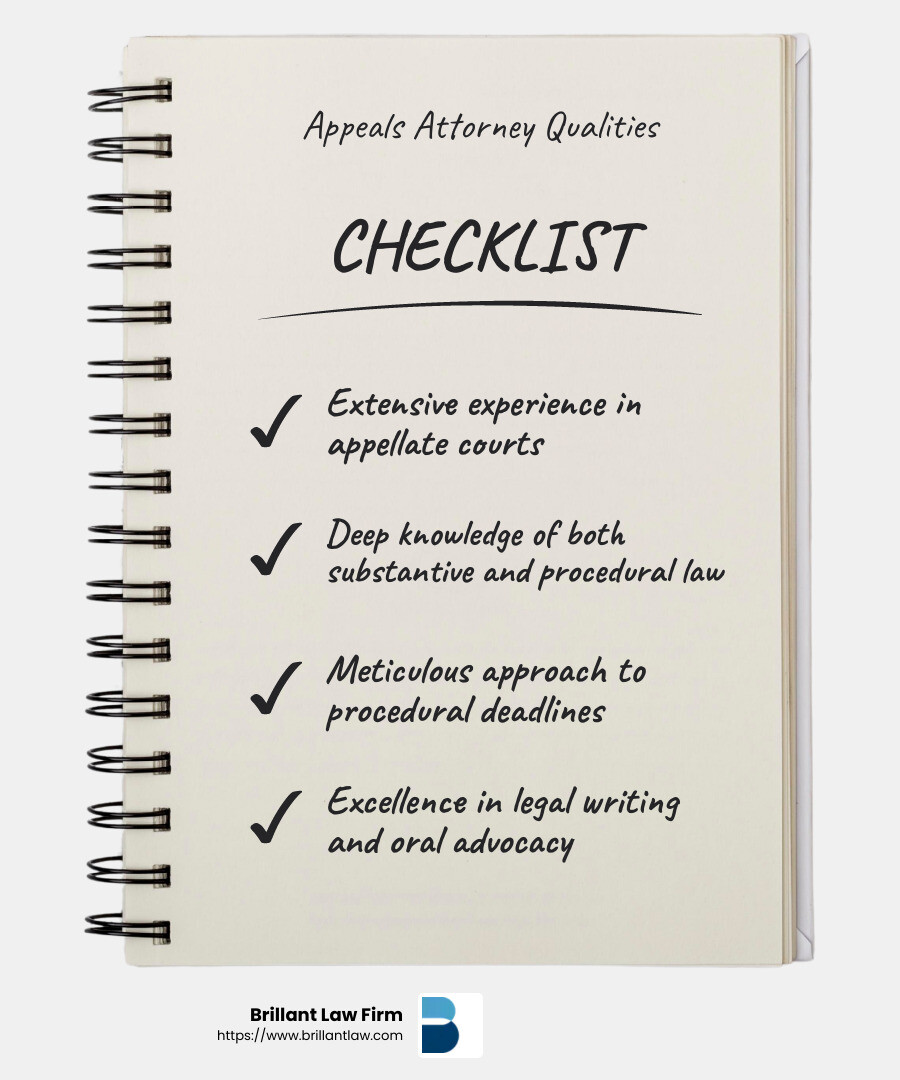
When you’re looking for an appeals court attorney, it’s crucial to focus on four main qualities: experience, legal expertise, procedural knowledge, and persuasive skills. These qualities ensure the attorney can effectively handle the complexities of appellate courts, whether at the state, federal, or Supreme Court level.
Experience in Appellate Courts
Experience is key. An attorney with a background in state appellate courts, federal appellate courts, and even the Supreme Court brings invaluable insights. This kind of experience means the attorney knows how to steer different court systems and understands the nuances of appellate procedures.
Legal Expertise
Legal expertise involves a deep understanding of both substantive and procedural law. An effective appellate attorney must craft a solid legal strategy that focuses on pivotal legal issues. They must dissect the trial record and identify where the law may have been misapplied. This requires not just knowledge, but the ability to interpret and apply complex legal principles.
Procedural Knowledge
Understanding procedural knowledge is critical. This includes knowing filing deadlines, preparing persuasive briefs, and mastering oral arguments. For instance, in federal appeals, missing a filing deadline can result in dismissal. An attorney must have a meticulous approach to ensure all procedural steps are followed precisely.
Persuasive Skills
Finally, persuasive skills are essential. This means excelling in both legal writing and oral advocacy. A well-crafted appellate brief can persuade judges even before oral arguments begin. During oral arguments, the attorney must engage with judges, answering questions and clarifying points. This isn’t about emotional pleas; it’s about clear, logical argumentation that addresses the judges’ concerns directly. As noted in the case “In re Marriage of Shaban,” appellate advocacy is not just a rehash of trial arguments but requires rigorous original work.
By focusing on these key qualities, you can ensure that your appeals court attorney is well-equipped to handle the intricacies of your case and maximize your chances for a favorable outcome.
How to Choose the Right Appeals Court Attorney
Choosing the right appeals court attorney can make a big difference in the outcome of your case. Here’s how to find the best fit for your needs.
Researching Potential Attorneys
Start with thorough research. Look for online reviews and check legal directories to find attorneys with strong reputations. The bar association is also a great resource for finding qualified attorneys in your area. Pay attention to:
- Online Reviews: Read what past clients say about their experiences.
- Legal Directories: Use directories to find attorneys who specialize in appeals.
- Bar Association: Verify the attorney’s credentials and standing.
Initial Consultation
Once you have a shortlist, set up an initial consultation. This is your chance to evaluate the attorney’s approach and see if they’re a good match for your case. During the consultation, consider:
- Case Evaluation: How does the attorney assess your case?
- Legal Strategy: What strategy do they propose for your appeal?
- Fee Structure: Are their fees transparent and reasonable?
Evaluating Track Record
A strong track record is a key indicator of an attorney’s capability. Look into their past cases to gauge their success rate and experience with notable cases. Consider:
- Past Cases: Have they handled cases similar to yours?
- Success Rate: What percentage of their appeals have been successful?
- Notable Cases: Have they been involved in any high-profile appeals?
Client Testimonials
Finally, pay attention to client testimonials. These provide insight into the attorney-client relationship and the outcomes of past cases. Look for:
- Client Feedback: What do clients say about working with the attorney?
- Case Outcomes: Were the clients satisfied with the results?
- Attorney-Client Relationship: Was the attorney communicative and supportive?
By following these steps, you’ll be better equipped to choose an appeals court attorney who can effectively handle your case and help you achieve the best possible outcome.
Frequently Asked Questions about Appeals Court Attorneys
What are the 3 types of appeals in court?
There are three main types of appeals you might encounter:
Direct Appeal: This is the most common form of appeal. It involves challenging the final decision of a trial court. If you believe there was a legal mistake during your trial, you can request a higher court to review the decision.
Discretionary Appeal: Unlike direct appeals, discretionary appeals aren’t automatically granted. The higher court has the choice to decide whether to hear your case. This type of appeal is often used for reviewing significant legal questions or errors.
Interlocutory Appeal: This appeal occurs before the trial is over. It’s used to address specific legal questions that arise during the trial, which could impact the final outcome. Interlocutory appeals require permission from both the trial and appellate courts.
What does it mean when a lawyer appeals?
When a lawyer files an appeal, they’re asking a higher court to review the decision of a lower court. This is usually because they believe there was a legal error that affected the trial’s outcome. The higher court can:
- Uphold the Decision: Agree with the original ruling.
- Reverse the Decision: Change the outcome, such as overturning a guilty verdict.
- Remand the Case: Send it back to the lower court for further proceedings, often with specific instructions.
How to appeal a case in Georgia?
Appealing a case in Georgia involves several steps:
Direct Appeal: File a notice of appeal with the trial court. This must be done within a specific timeframe after the court’s decision. Your appeals court attorney will prepare the necessary documents and arguments.
Discretionary Application: For certain cases, like those involving small claims or administrative decisions, you must submit a discretionary application. This asks the appellate court to review your case, and they can choose whether to grant it.
Interlocutory Application: If you need to appeal a decision made during the trial, you can file an interlocutory application. This requires obtaining permission from both the trial court and the appellate court.
In Georgia, the appellate process is designed to ensure legal errors are corrected, and justice is served. Working with an experienced appeals court attorney is crucial to steer this complex process effectively.
Conclusion
At the Brillant Law Firm, we pride ourselves on our unrivaled appeals expertise and commitment to achieving the best outcomes for our clients. Our team of skilled attorneys has a deep understanding of both state and federal appellate courts, enabling us to steer the complexities of the appeals process with precision and care.
Client Dedication is at the heart of what we do. We believe in providing personalized strategies custom to each client’s unique situation. Our attorneys work closely with clients to ensure they understand every step of the appeals process and feel supported throughout their legal journey.
Our commitment to legal excellence is reflected in our track record of successful appeals. We combine thorough legal research, strategic thinking, and persuasive advocacy to present compelling arguments in appellate courts. Our attorneys are not only experts in substantive and procedural law but also skilled in crafting powerful appellate briefs and delivering effective oral arguments.
When you choose Brillant Law Firm for your appeal, you’re choosing a partner dedicated to pursuing justice and protecting your rights. We invite you to learn more about our services and how we can assist you by visiting our appeals attorney page.
In the intricate world of appellate law, having a knowledgeable and experienced team by your side can make all the difference. Trust Brillant Law Firm to guide you through the appeals process with dedication and expertise.


